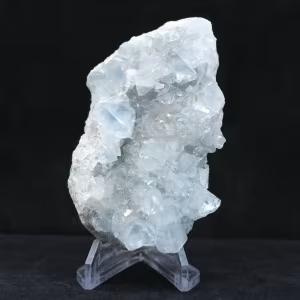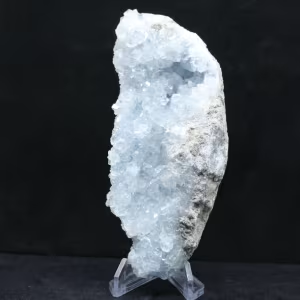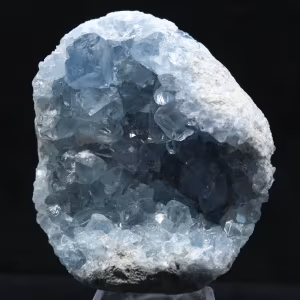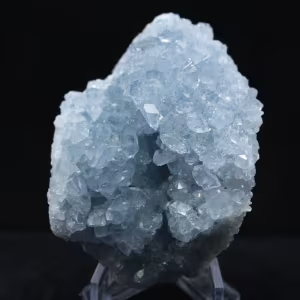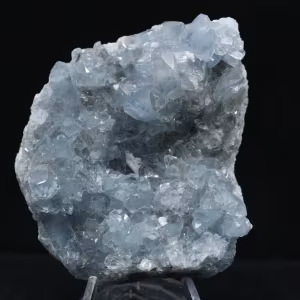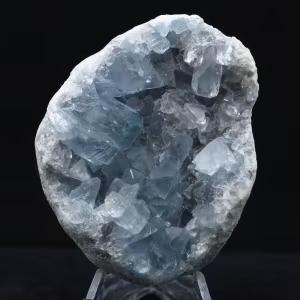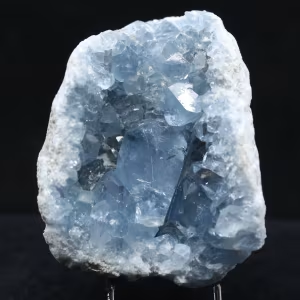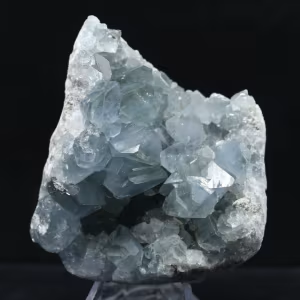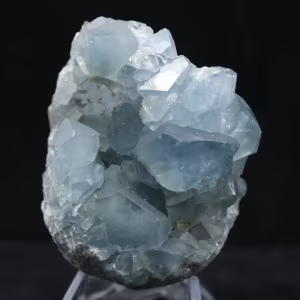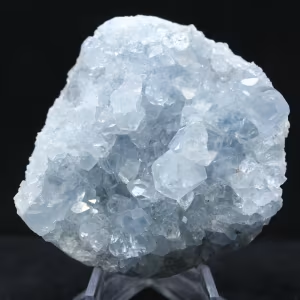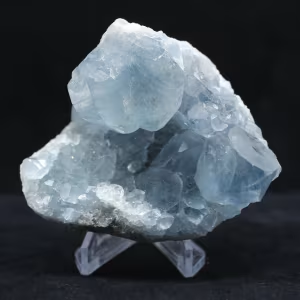
The blue celestite geodes of
Madagascar are captivating mineral formations, highly prized by collectors and mineralogy enthusiasts. These geodes are distinguished by their characteristic blue color, resulting from the presence of
strontium in their chemical composition. Celestite, also known as
strontium sulfate, typically crystallizes as prismatic or tabular
crystals, often clustered in sparkling groups within rock cavities.
Madagascar is renowned for the exceptional quality of its celestite geodes, which form thanks to specific geological conditions that favor
crystallization.
Celestite geodes from
Madagascar form in sedimentary environments where
strontium sulfate precipitates to form
crystals within rock cavities. These cavities are often found in limestone or dolomitic
raw rocks and minerals">
rocks, where geological processes such as dissolution and recrystallization play a key role. The blue color of the
crystals is due to microscopic inclusions and impurities that alter light absorption. Thanks to these processes, each geode has a unique structure, with
crystals varying in size and color intensity, offering a fascinating diversity for collectors.
The blue celestite geodes from
Madagascar are prized for their natural beauty and their ability to capture light, creating a striking visual effect. They are often used as decorative
objects, bringing a touch of elegance and serenity to interior spaces. Due to their natural beauty, these geodes are also popular in private collections and mineralogical exhibitions. These geodes are not only decorative
objects but also testaments to Madagascar's rich geological heritage.