


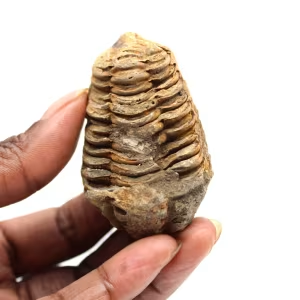
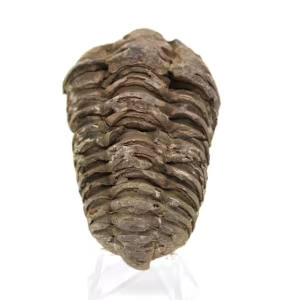
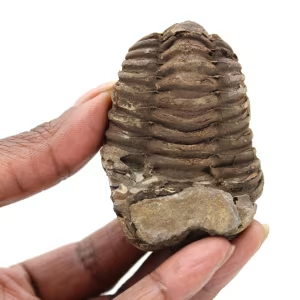
Trilobite
45 g
 Morocco
9.00 €
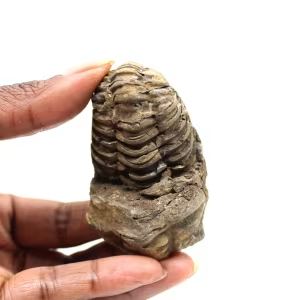
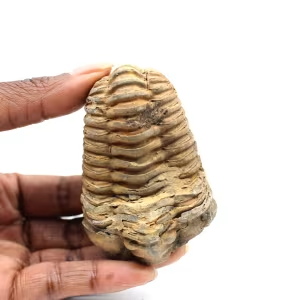
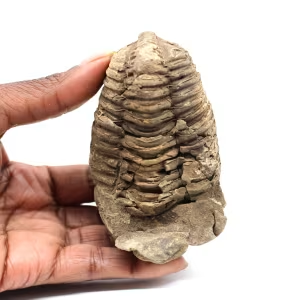
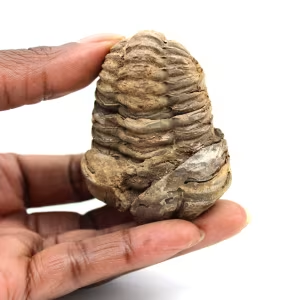
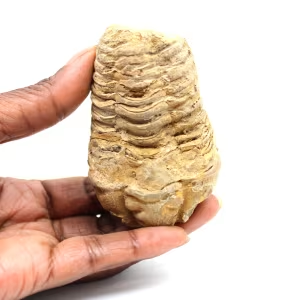
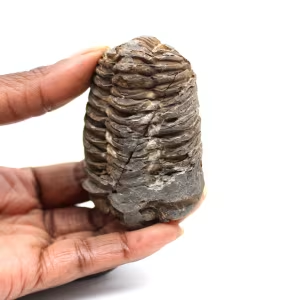
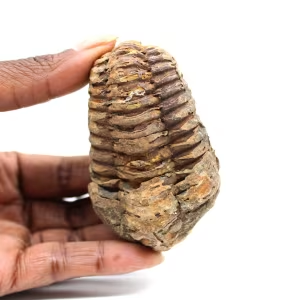
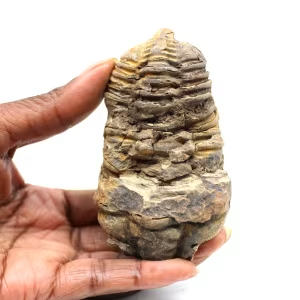
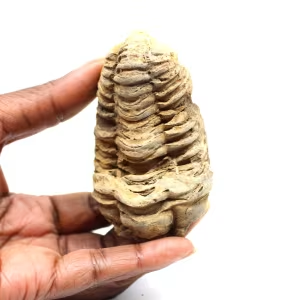
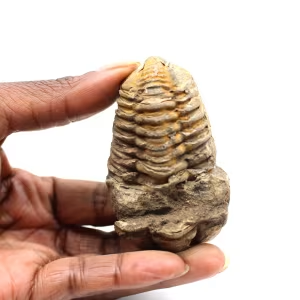
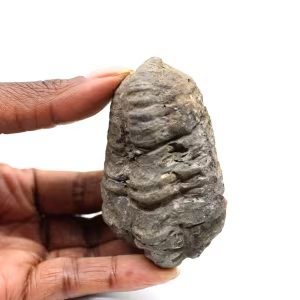
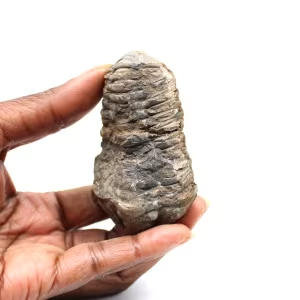
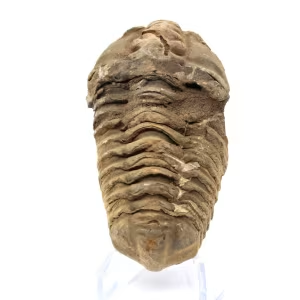
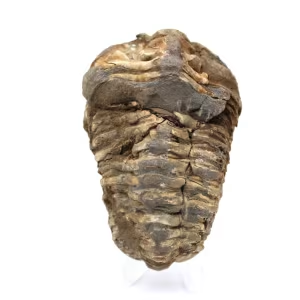
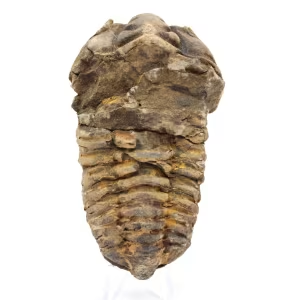
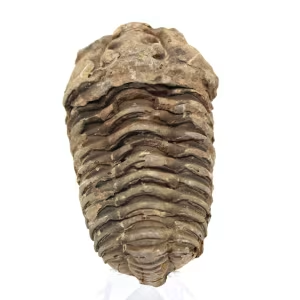
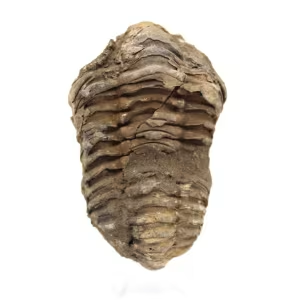
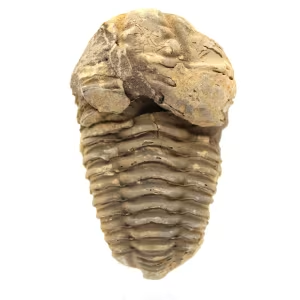
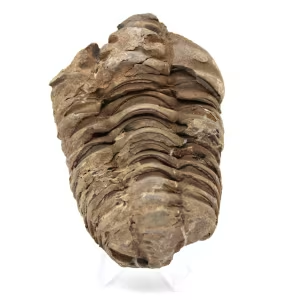
Trilobites are a group of marine arthropods that lived during the Paleozoic era, from the Cambrian to the Permian. Appearing about 521 million years ago, they experienced great diversification and abundance before disappearing during the Permian-Triassic mass extinction, 252 million years ago. Their name comes from the division of their body into three longitudinal lobes: a central lobe (rachis) and two lateral lobes. This structure is characteristic and allows them to be easily identified. Trilobites had a rigid exoskeleton made of chitin and minerals, which they could shed as they grew. Their bodies were segmented, with a head bearing compound eyes, antennae, and a mouth. The trunk was composed of several segments (thorax) and ended in a tail. Trilobites are of paramount importance to paleontology. Their study allows us to better understand the evolution of life on Earth, particularly during the Cambrian, a period marked by an explosion of biodiversity. Trilobites are excellent indicator fossils, because their presence and diversity allow us to date sedimentary terrains.
Morocco
 Morocco
 Morocco
 Morocco
 Morocco
 Morocco
 Morocco
 Morocco
 Morocco
 Morocco
 Morocco
 Morocco
 Morocco
 Morocco
 Morocco
 Morocco
 Morocco
 Morocco
 Morocco
 Morocco
 Morocco
 Morocco